Role
Lead Product Designer
Date
February - April 2020
Industry
Enterprise Hardware
Financial Services
Defense & Aerospace
Healthcare
Telecommunications
Collaborators
Chief Strategy Officer
Product Manager
Engineers
Key Stakeholders
Background
Company - MBX Systems
MBX Systems designs and delivers custom hardware solutions for companies with complex engineering, manufacturing, and global deployment needs. Through a combination of purpose-built hardware and its Hatch platform (a cloud-based management toolset for teams to collaborate and manage hardware programs in a 24/7 environment), MBX gives customers greater visibility and control across the entire hardware lifecycle.
Where It Began
As COVID-19 disrupted global supply chains, customers lacked a reliable way to understand how country-level changes would impact active hardware programs. The need for real-time visibility into disruption risk, compliance requirements, and shipment readiness became a clear product opportunity, catalyzing the creation of a centralized tool designed to support proactive decision-making under uncertainty.
The Problem
Without a unified view, customers were often reacting too late to global events that directly affected their supply chain.
Key User Personas

Supply Chain Lead
Goal: Maintain delivery timelines
Fear: Unknown regional disruptions
Needs: Early warning + clear next steps

Operations Lead
Goal: Ensure compliance and logistics accuracy
Fear: Missed certifications or shipping blocks
Needs: Trustworthy, up-to-date country rules

Engineering Lead
Goal: Avoid last-minute rework
Fear: Electrical or regulatory mismatches
Needs: Country-specific constraints early
Design Process
Research
I partnered closely with operations, supply chain, and engineering stakeholders to understand how teams were tracking risk across countries and shipments. My research focused on identifying where decision-making broke down when conditions changed quickly and what information teams needed earlier to stay ahead of impact.
Key research methods included stakeholder interviews, workflow walkthroughs, and analysis of existing tracking behaviors across internal tools and third-party data sources.
Key Insights
Research revealed three consistent pain points:
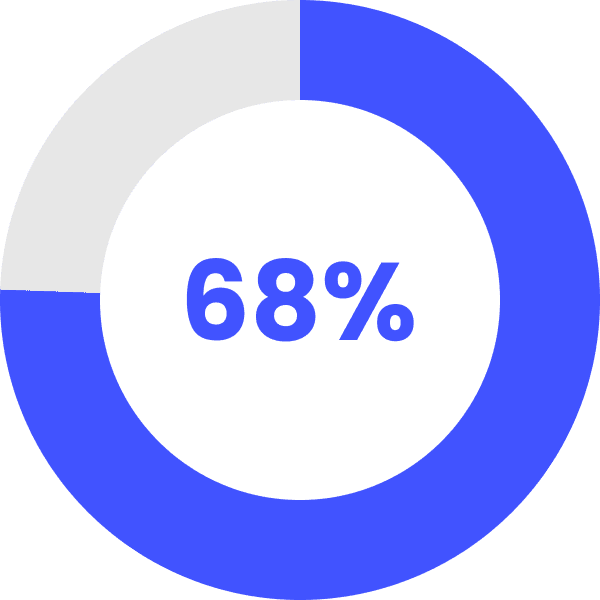
Teams often learned about country-level disruptions after shipments were already in motion.
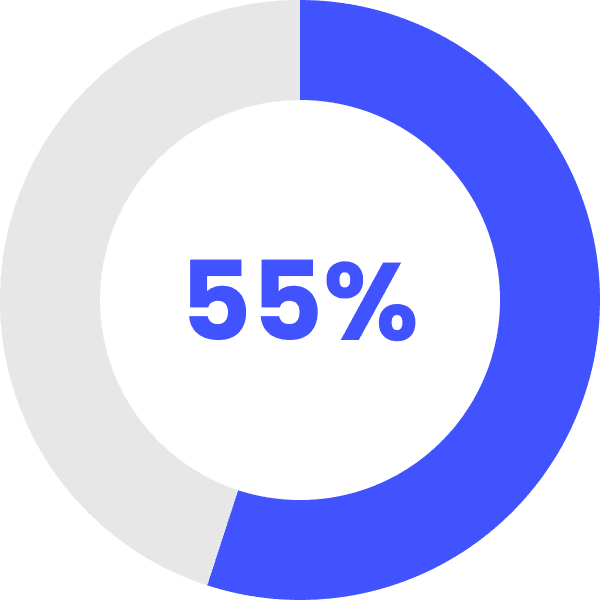
Manual tracking or external sources for country compliance information pulled from multiple sources made it difficult to trust which were current or actionable.
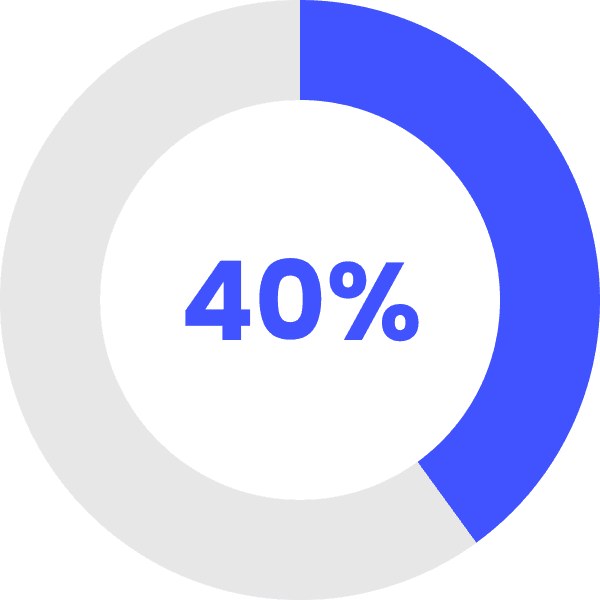
With the lack of early visibility, users needed both a fast way to assess global risk and the ability to drill into details without switching tools.
Proposed User Flow

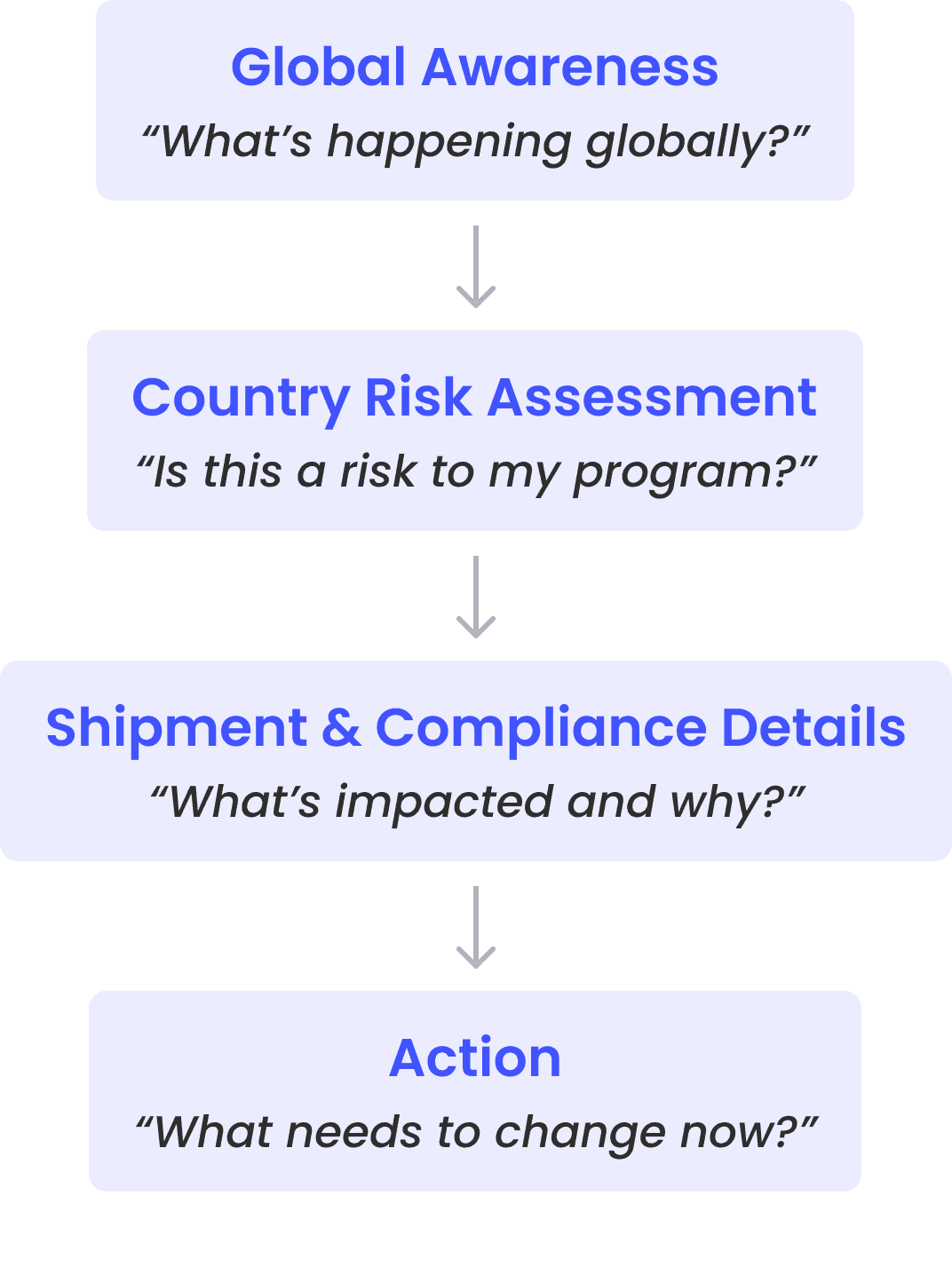
The user flow was designed to reflect how teams make decisions under pressure: orient quickly, assess risk, and focus attention where it matters most.
Users start with a high-level view to identify potential areas of concern without getting buried in detail. From there, they move into country-level insights to understand why a region is at risk and how it may impact active shipments, compliance, and timelines.
Detailed shipment and certification information is available only when needed, allowing users to take informed action while keeping the overall experience fast, focused, and easy to scan.
Design Solutions 🛠️
The solution focused on making complex, fast-changing operational data easy to understand and act on. Instead of exposing raw information, the experience prioritized clarity, helping teams quickly identify risk, understand impact, and make informed decisions during disruption.
Partnering with Developers
I worked closely with development to learn about and uncover how we could use the Vizion API to surface real-time container/shipment data within Hatch. Early collaboration focused on data availability, update frequency, and edge cases.
By aligning design decisions with technical constraints early, we delivered an experience that balanced speed, clarity, and accuracy, giving teams confidence to act before disruptions escalated.
Transit Disruptions Designs
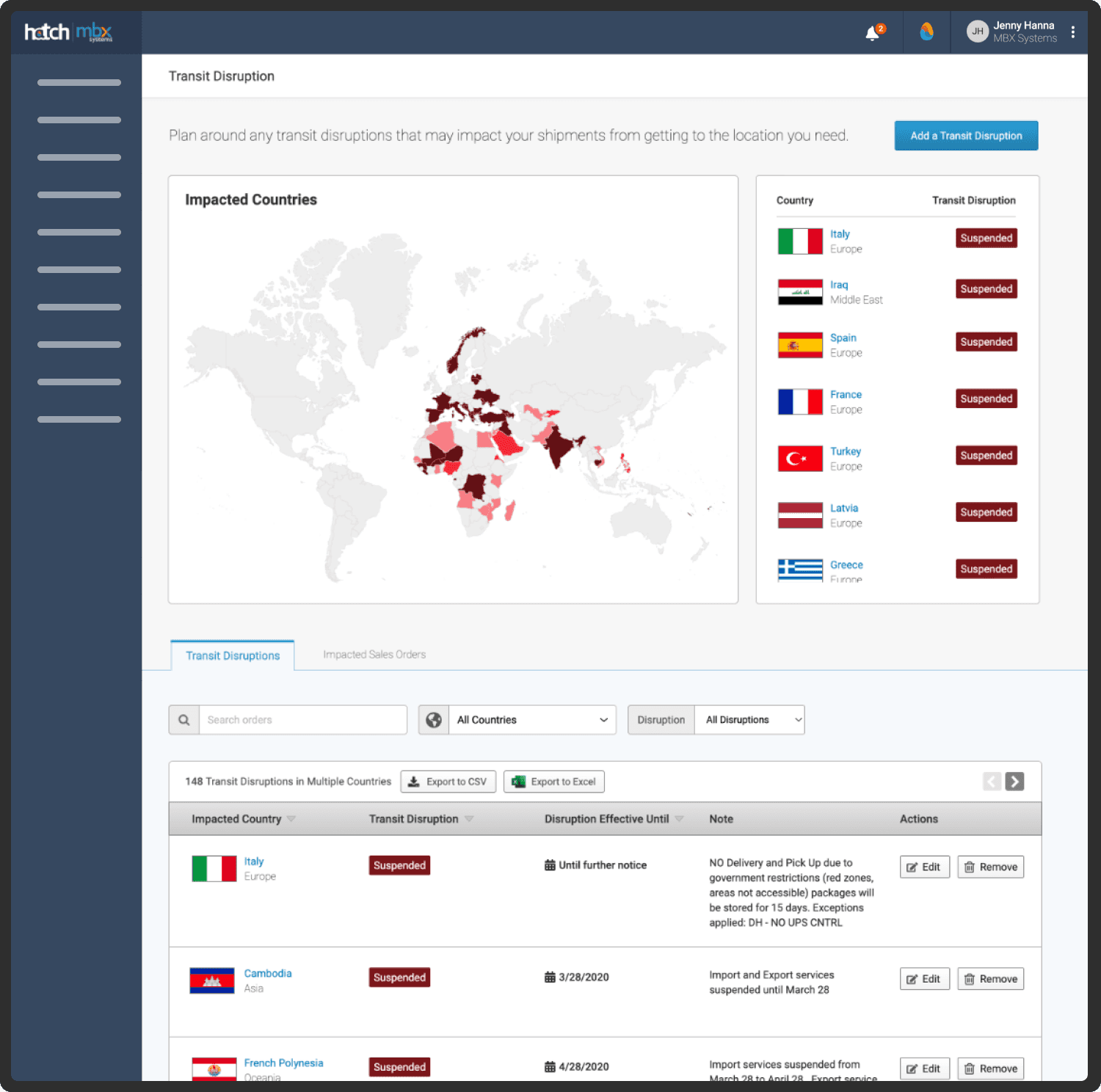
Global Transit Disruption Dashboard
(Global Awareness)
I used Vizion API data to create a color-coded global map that highlighted ease of import and shipping disruptions across countries.
Transit Disruption List (Country Risk Assessment)
Beneath the global map view, I designed a searchable and filterable table to support deeper investigation when additional detail was needed. This view surfaced notes alongside estimated disruption timelines, giving teams more context around each transit issue and helping them plan ahead with greater confidence.
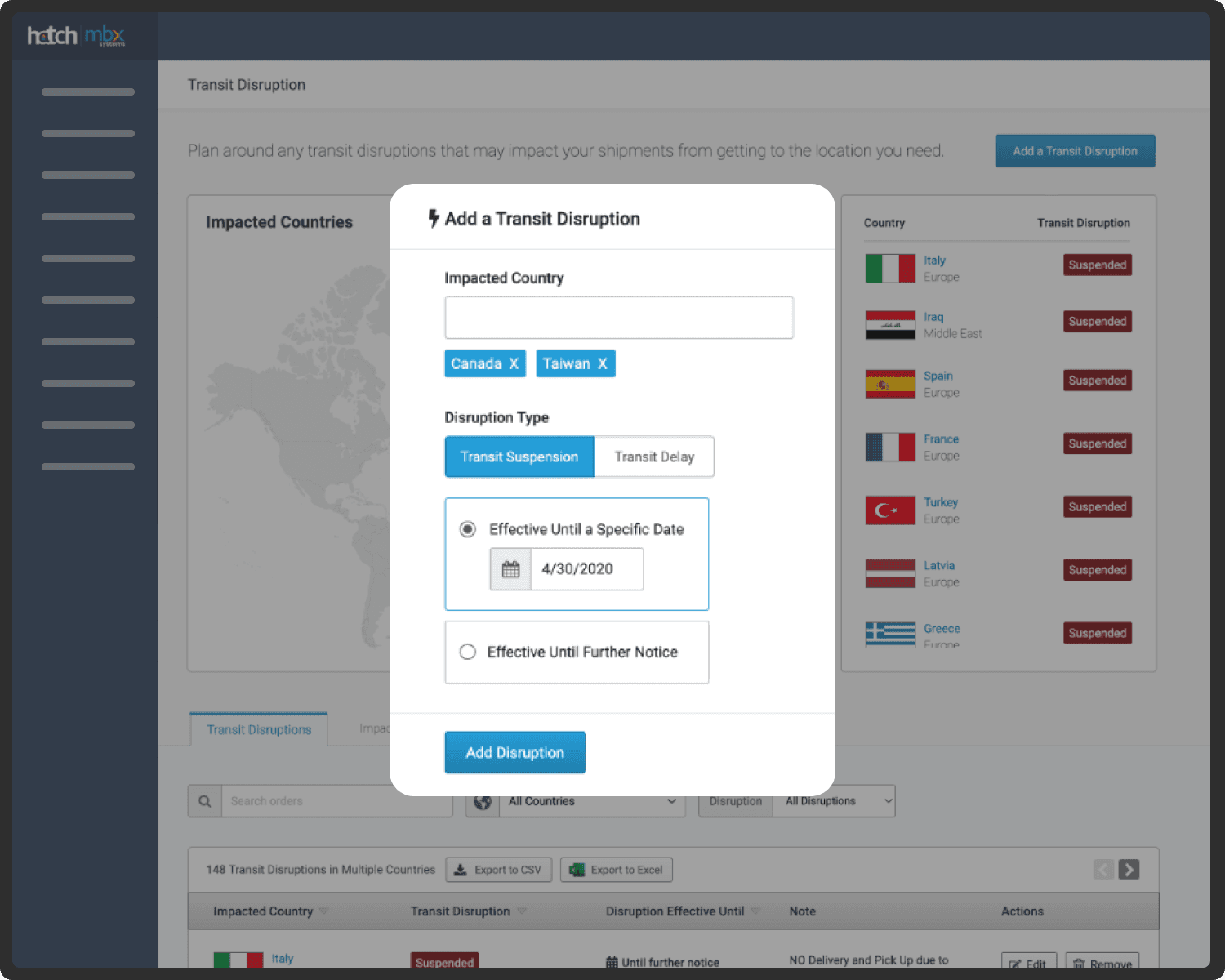
Adding Disruptions (Edge Case)
Although the API covered most transit disruptions, we accounted for edge cases by allowing disruptions to be added manually, giving teams a way to stay current and avoid unexpected delays.
💡
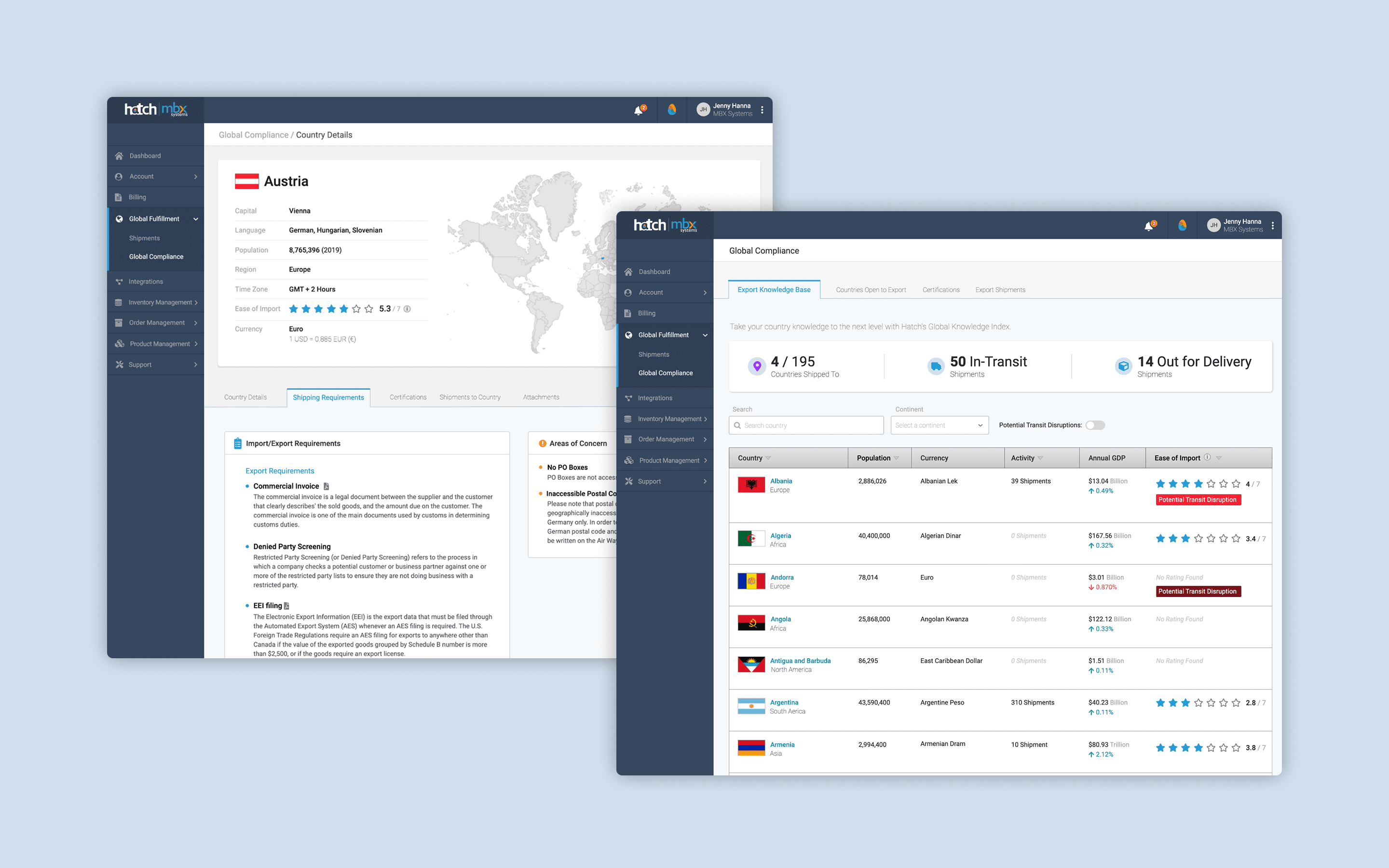
Compliance was always a known requirement, but combining it with transit disruptions added unnecessary complexity. We created a dedicated Global Compliance page to give shipment and certification details the depth they needed while keeping the disruption dashboard focused and easy to scan.
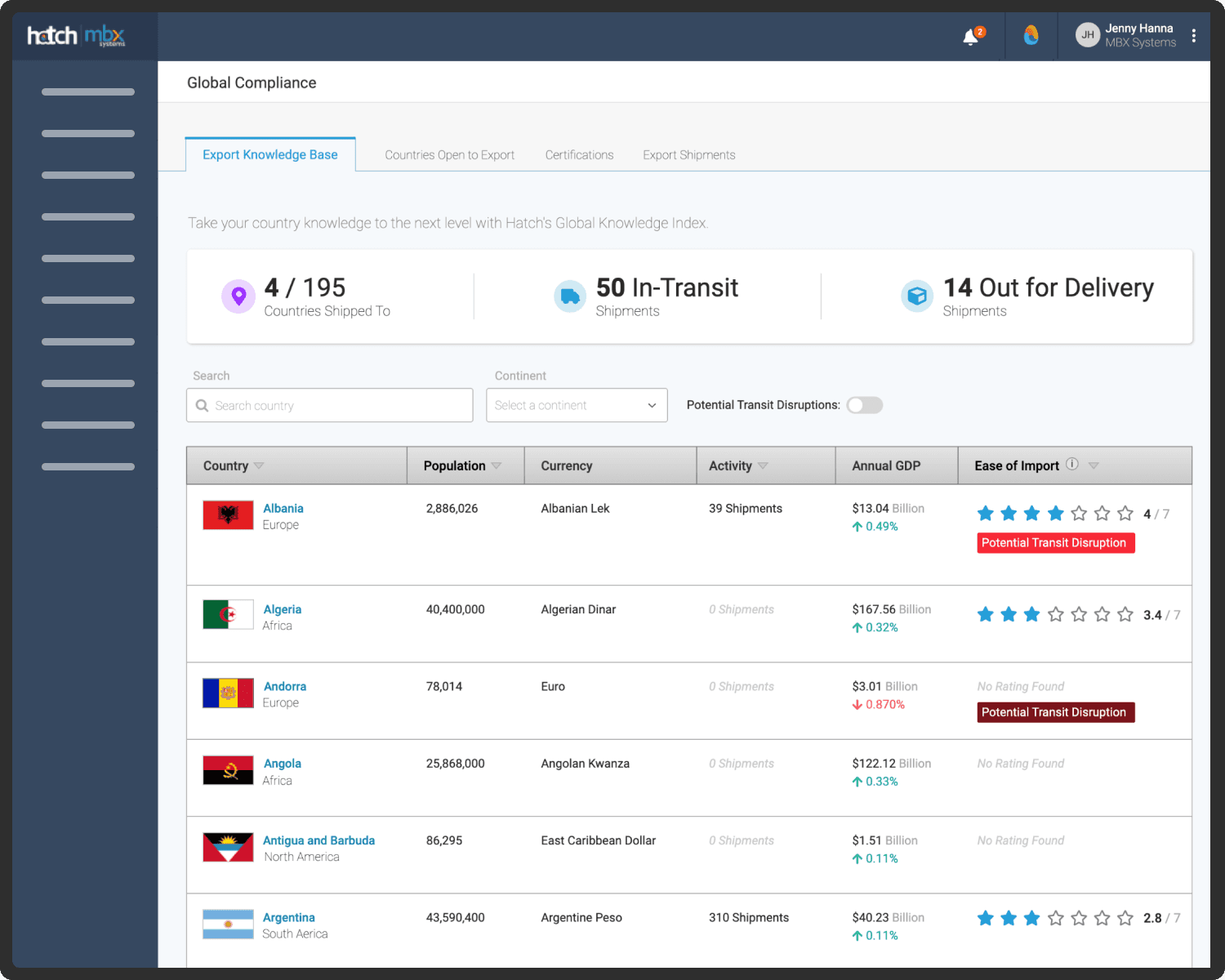
Global Compliance: Export Knowledge Base
The Export Knowledge Base provides a centralized view of country-level export readiness, combining shipment activity, economic context, and ease-of-import ratings in one place.
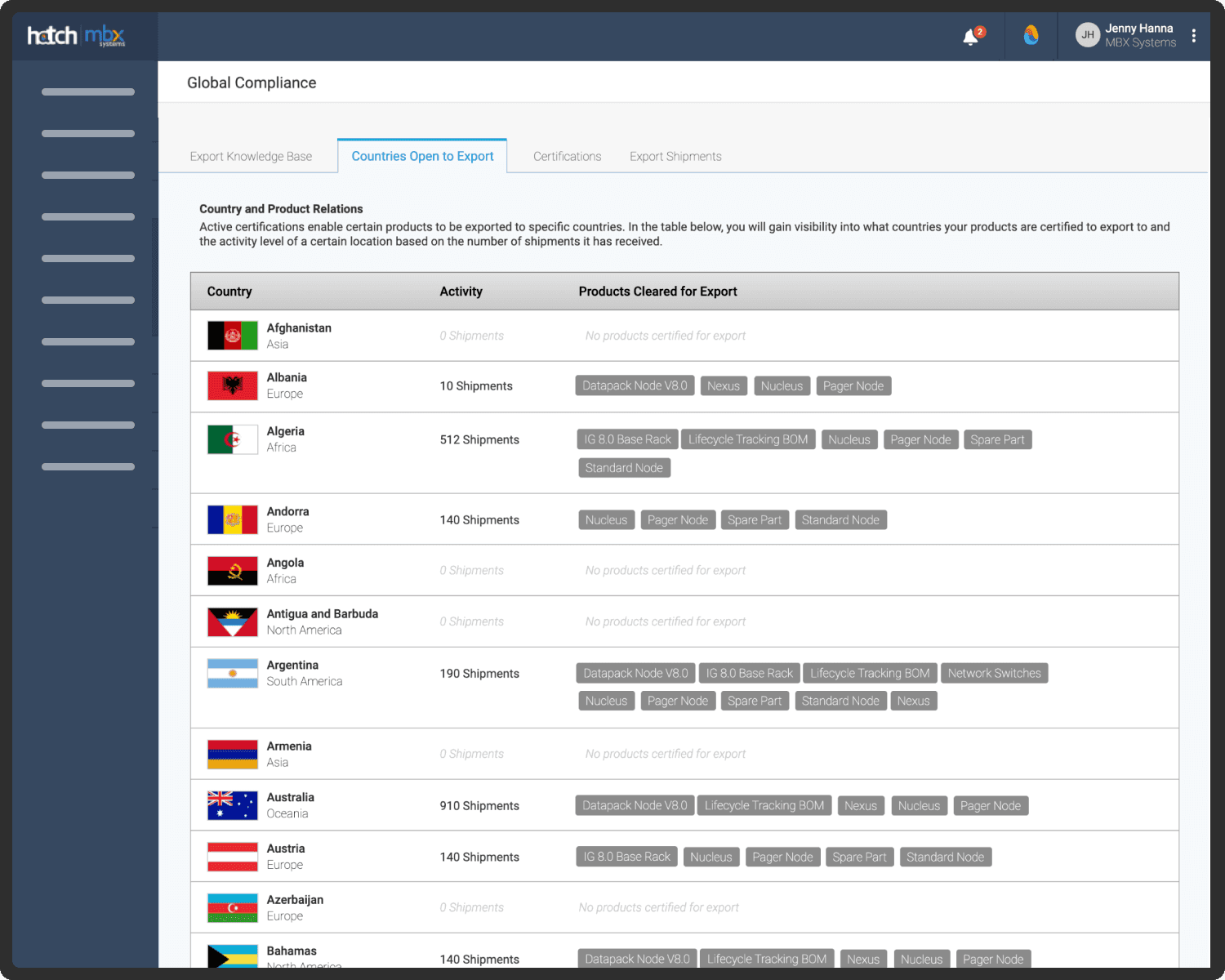
Countries Open to Export
(Shipment + Product Details)
Country and product relationships were surfaced to show which products were certified for export in each country, allowing teams to quickly confirm export readiness. By pairing shipment activity with approved certifications, teams could avoid compliance issues before shipping and plan deployments with greater confidence.
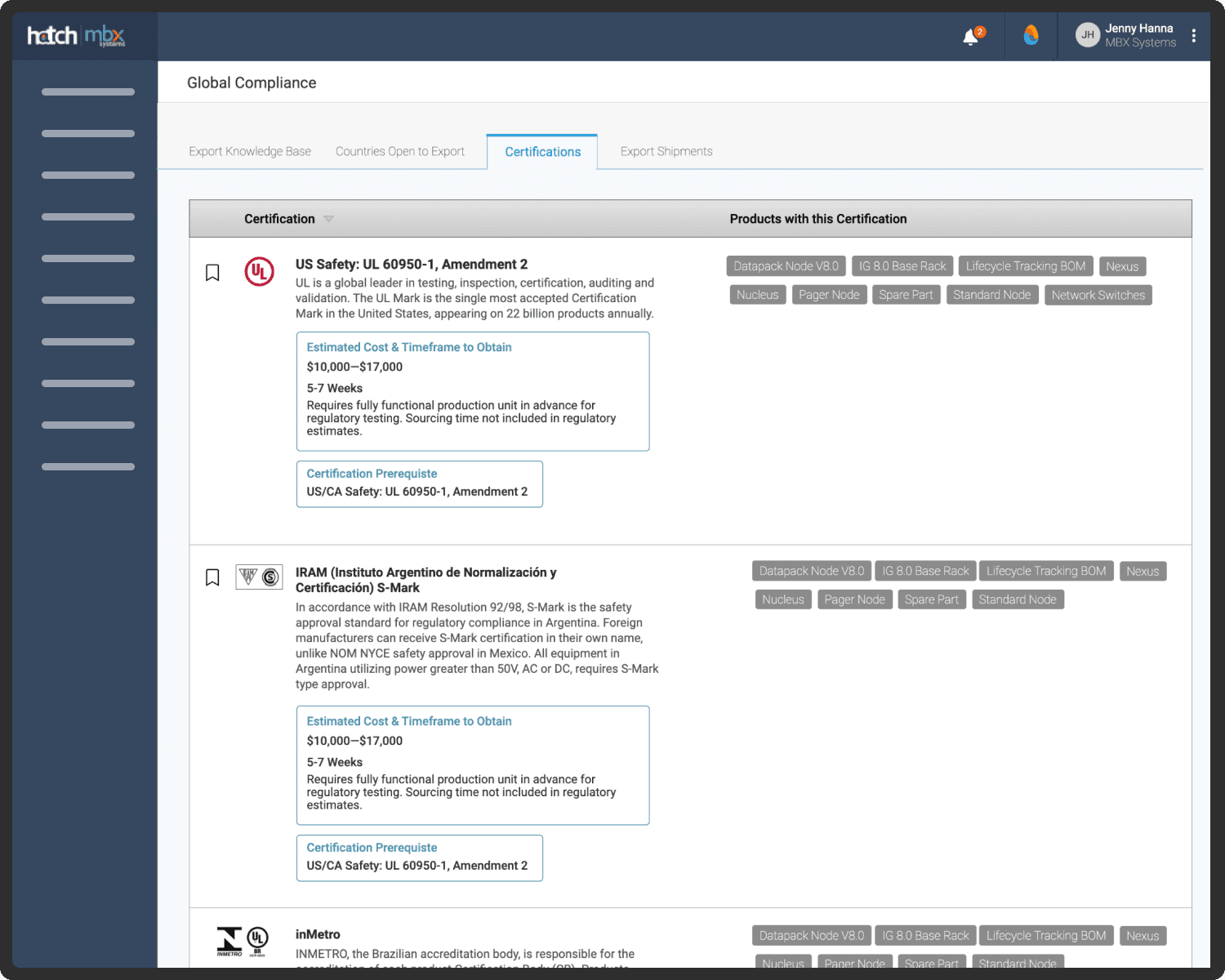
Certifications
(Compliance Details)
For cases where new certifications were required, I added a dedicated section in Global Compliance that outlined affected products, required certifications, and expected cost and timelines.
Outcomes & Impact
The Global Risk Tracker shifted teams from reactive to proactive decision-making during periods of global disruption. Measured and representative outcomes included:
By providing early visibility and trusted data, the Global Disruption Tracker feature helped customers maintain operational continuity and protect delivery timelines during periods of extreme uncertainty, which to our team was a big win!
Other Projects