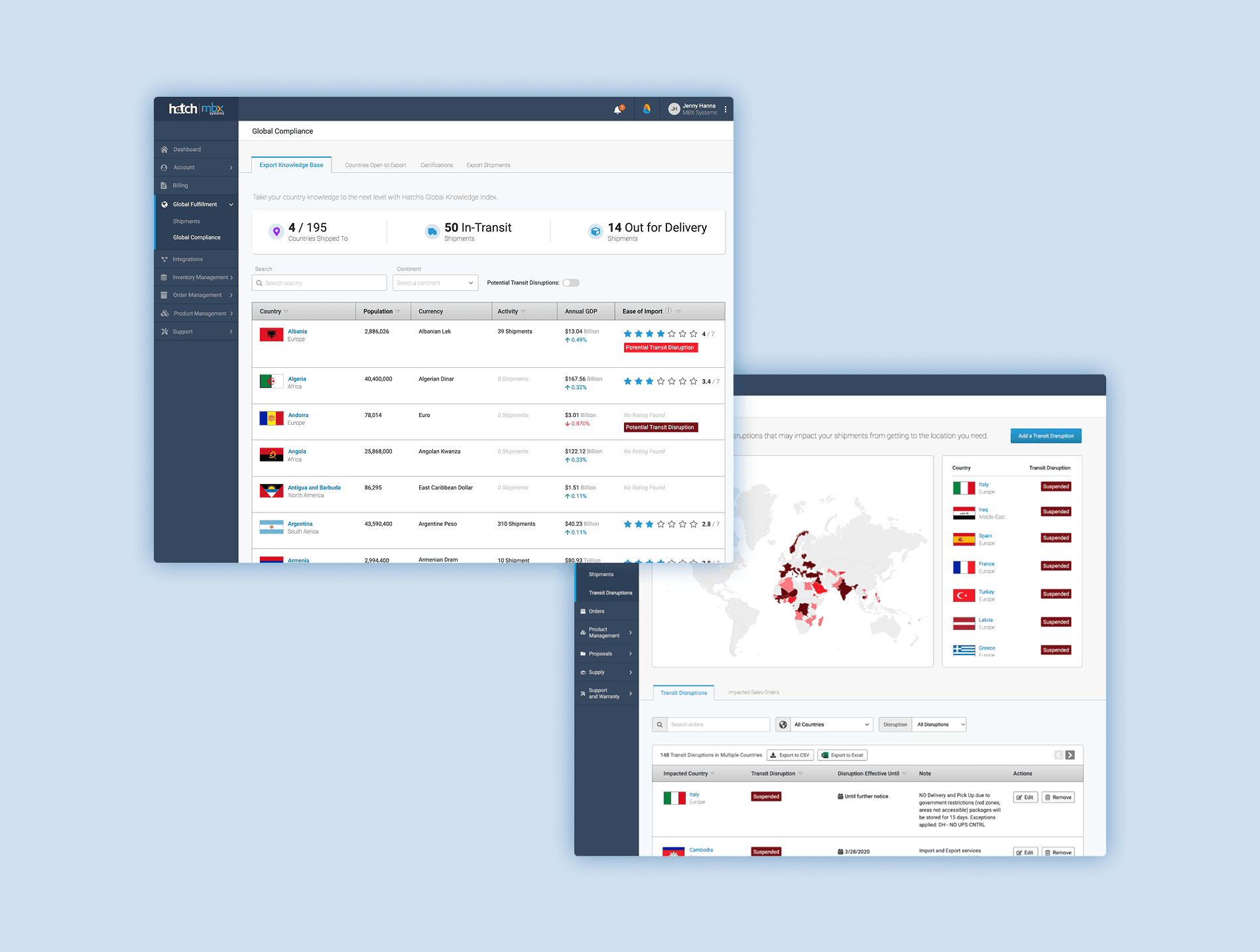
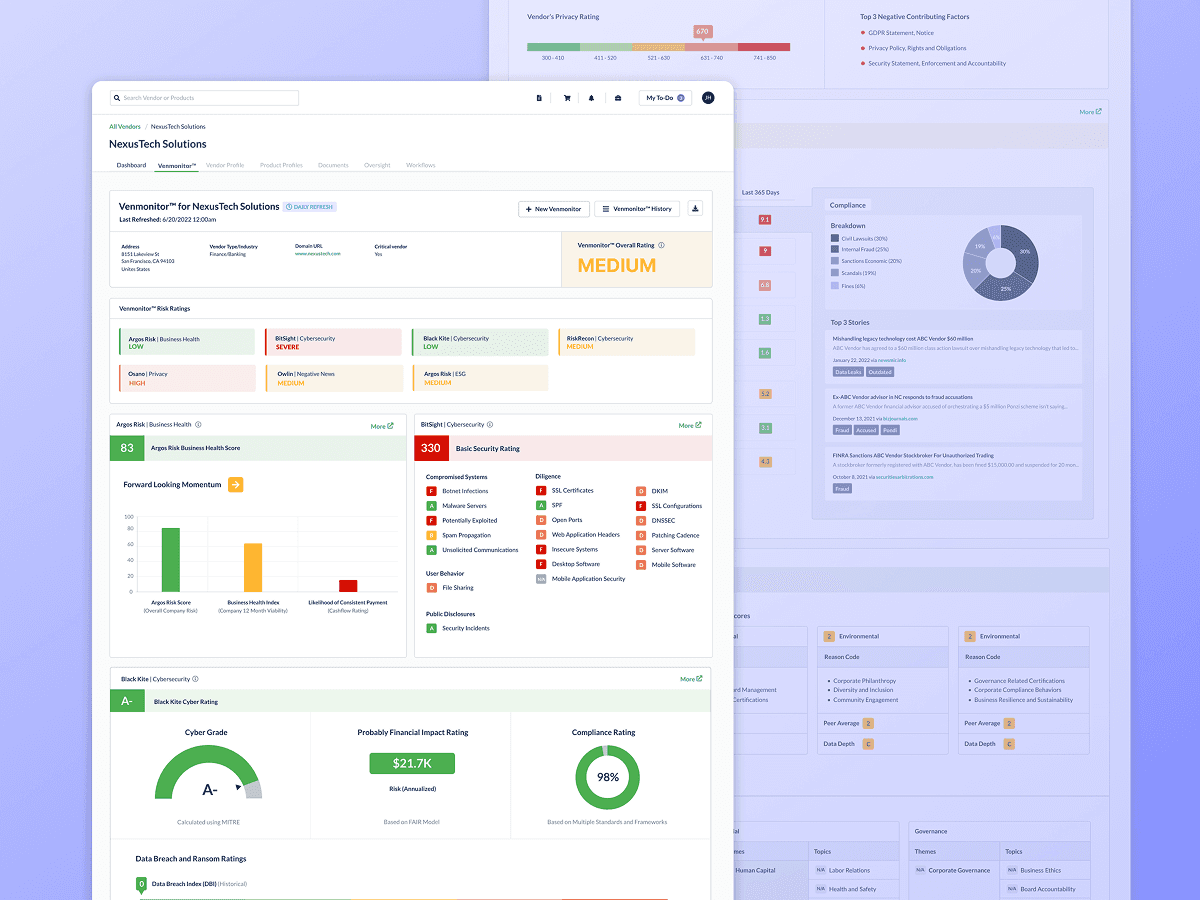
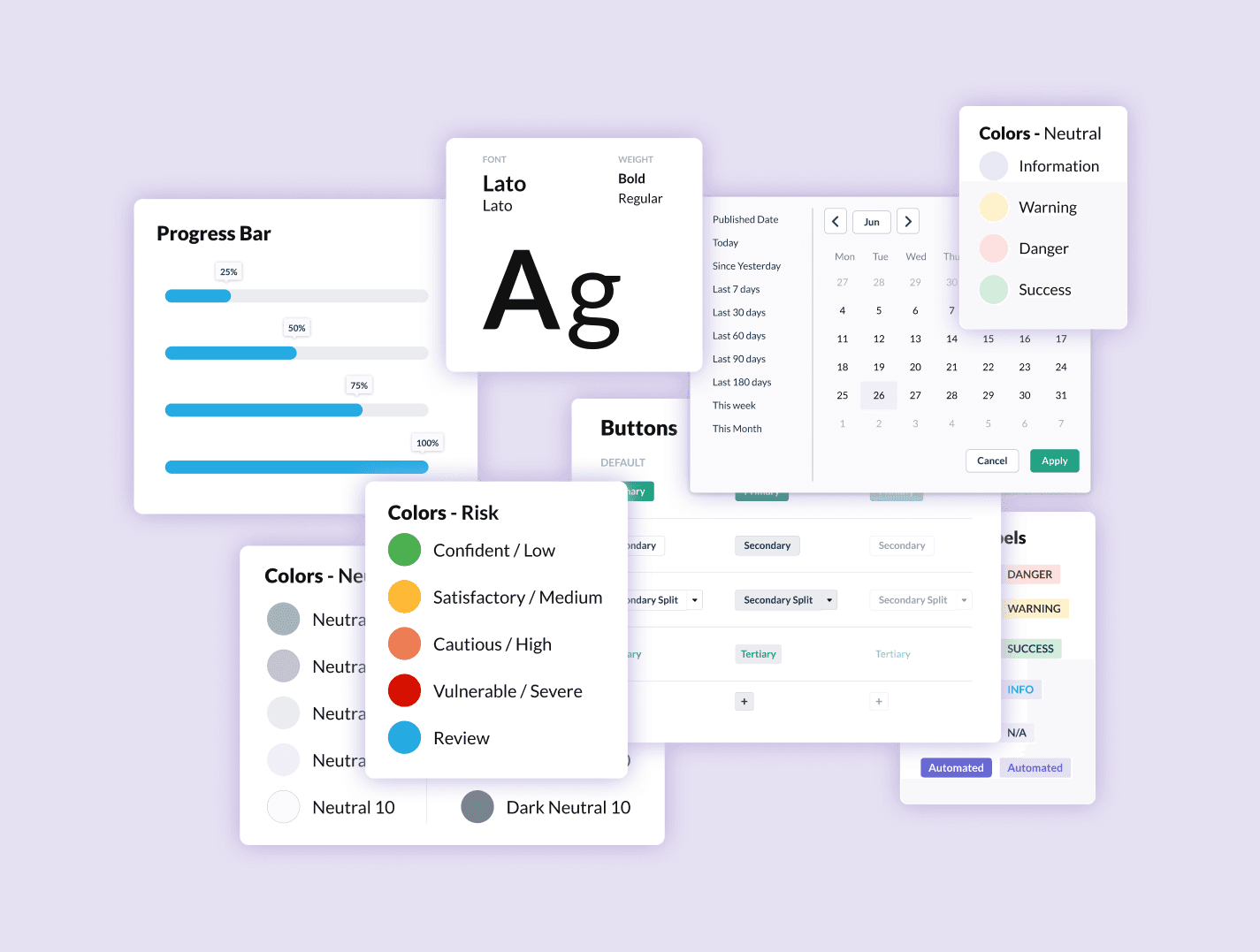
Designed during global instability, this feature gave teams real-time visibility into country-level disruptions. Centralized shipment, compliance, and certification insights helped customers anticipate risk and stay ahead of impact.
Role
Lead Product Designer
Date
February 2021 - April 2021
Industry
Fintech
Financial Services
Collaborators
Product Manager
Chief Technology Officer
Background
Company - Venminder
Venminder is a vendor risk management company that helps organizations manage third-party risk, compliance, and oversight through a centralized platform combining software, data, and expert services.
What are vendor questionnaires?
In Third-Party Risk Management (TPRM), vendor questionnaires are structured sets of questions sent to third-party vendors to evaluate how they manage risk. They’re used to gather evidence and insight across key risk domains before onboarding a vendor and throughout the vendor lifecycle.
What is the point of tiered questions?
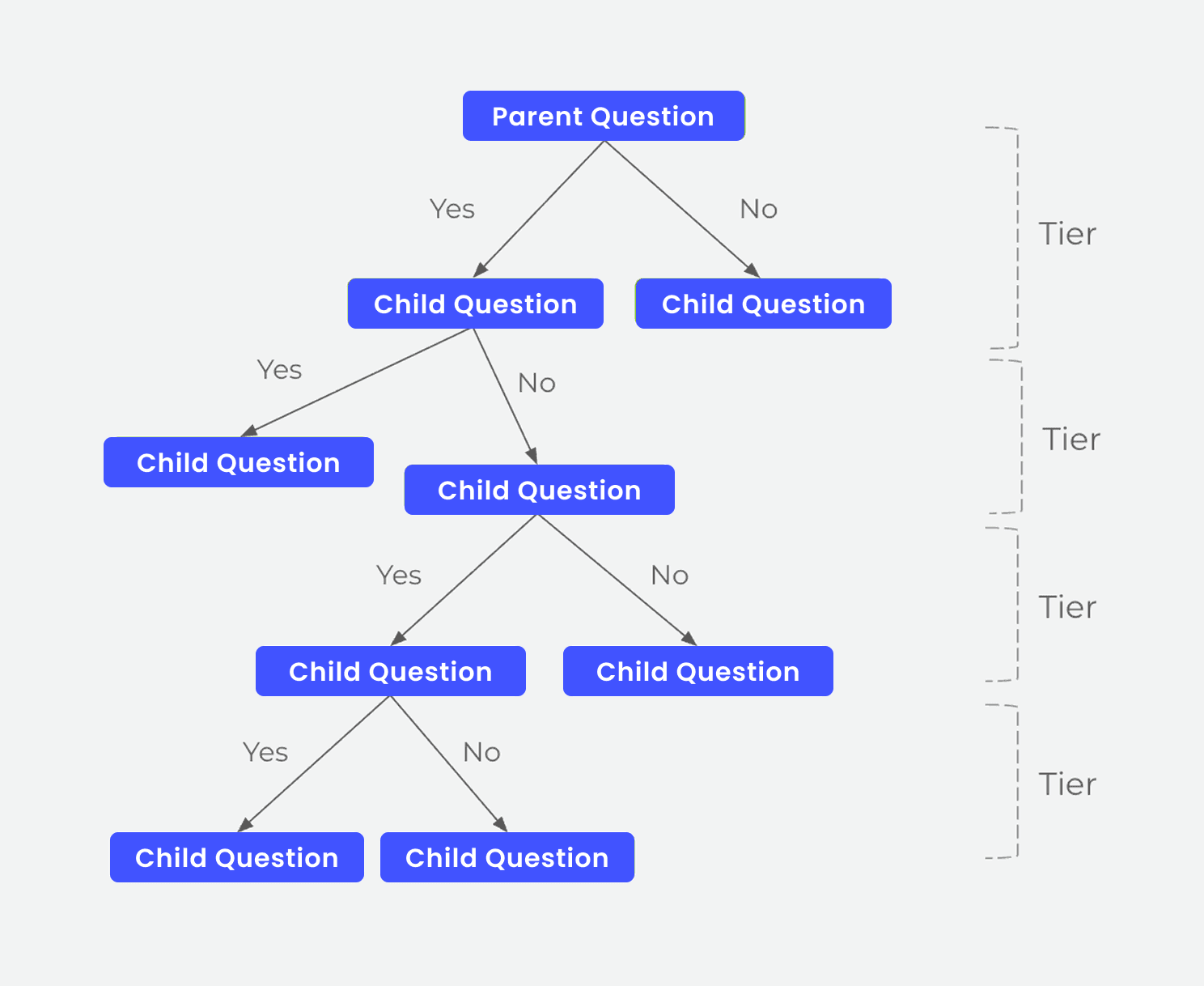
Companies use a tiered approach to vendor questionnaires so the depth of questions matches the level of risk a vendor presents. This ensures low-risk vendors aren’t overburdened, while higher-risk vendors receive more thorough, in-depth questions that drive clearer, higher-quality responses. The result is more efficient reviews and stronger insight for risk teams.
The Problem
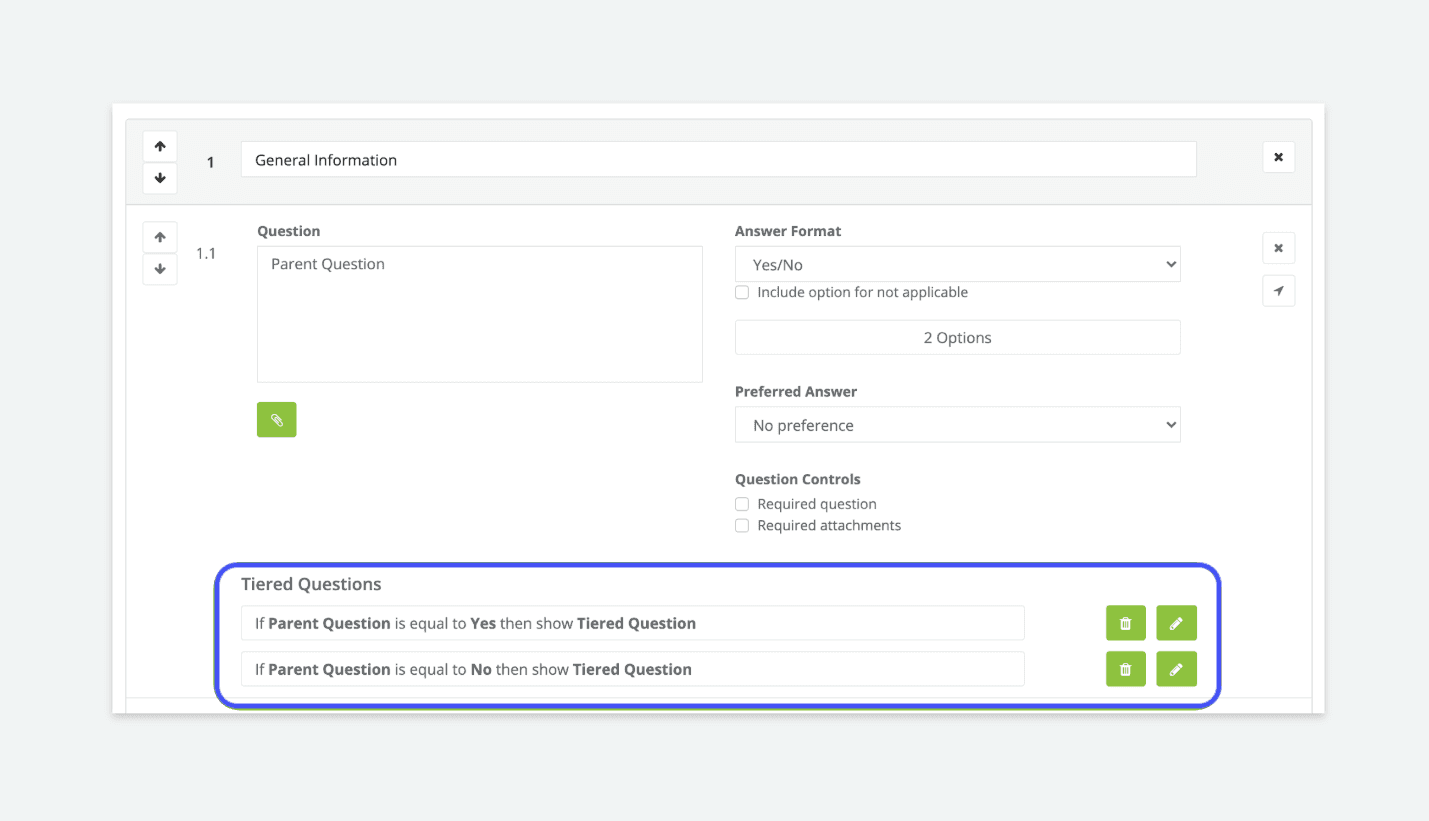
While the Venminder platform had a functional vendor questionnaire feature, the current state only supported the addition of one child question and not a multi-tier approach.
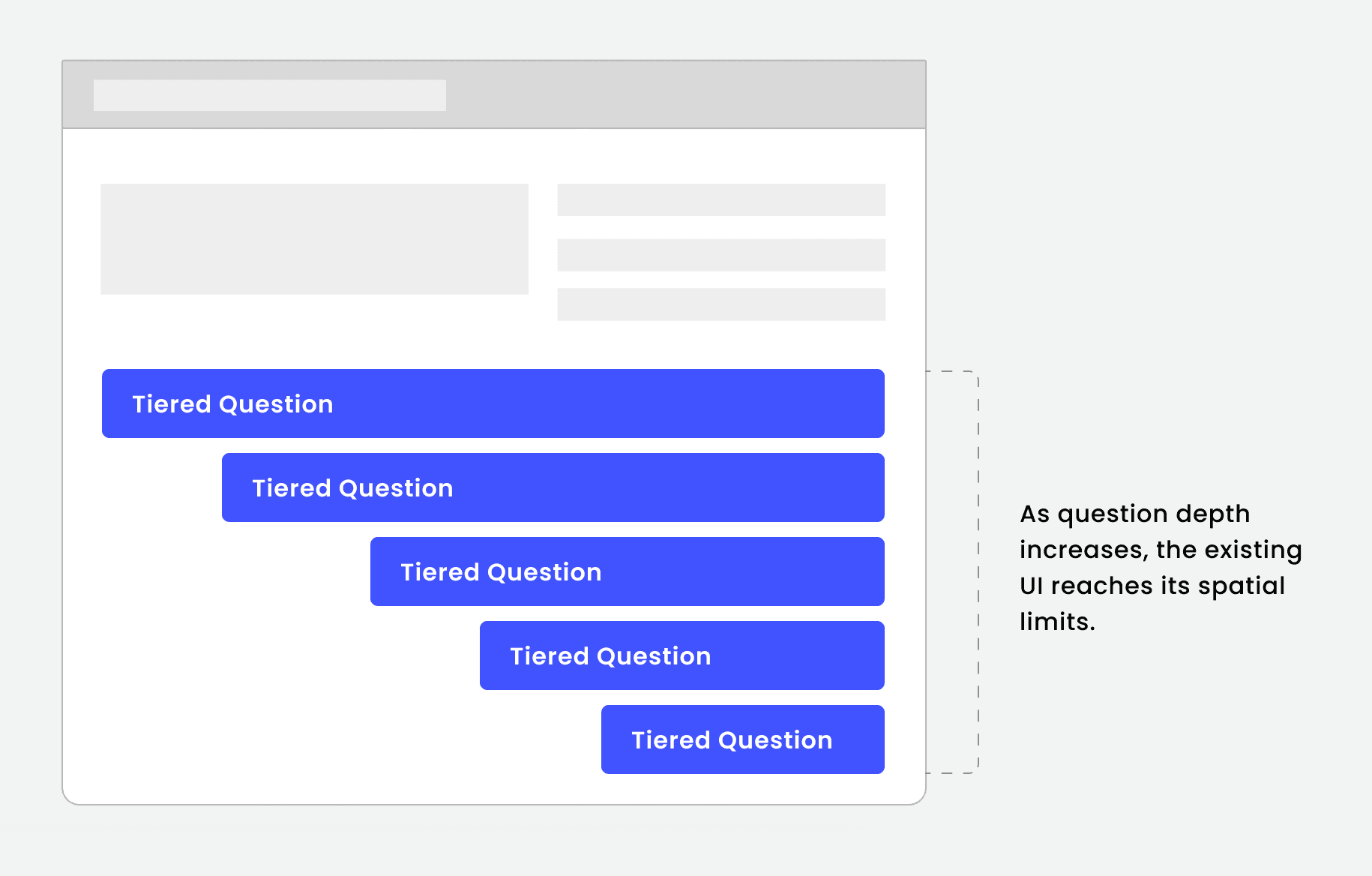
The existing questionnaire framework was not designed to support tiered questions. Adding this functionality would overcrowd the interface and result in a confusing, unusable experience.
Key User Persona

Vendor Manager
Goals: Efficiently collect accurate vendor information at the appropriate depth
Fear: Missing critical information or creating unnecessary vendor friction
Needs: Scalable, risk-based questionnaires that reduce manual work
Design Process
Research & Insights
To understand the limitations of the existing questionnaire experience, we conducted a combination of stakeholder interviews with internal risk and vendor management teams, workflow analysis of active vendor reviews, and qualitative feedback sessions with external vendor managers completing questionnaires.
Research revealed that a single-layer questionnaire model failed to scale with vendor complexity, creating inefficiencies for internal teams and friction for external users. These insights informed the design of a tiered questionnaire framework that enables proportional depth, improves response quality, and supports more scalable vendor oversight.
Insight 1 → Question Depth Must Be Conditional, Not Linear
What we learned
Vendor Managers need the ability to trigger follow-up questions based on how a vendor responds. Being limited to just one level deep is not enough.
Why it matters
A hierarchical question model allows teams to collect deeper, more accurate information.
Insight 2 → Flat Questionnaires Limit Risk Clarity
What we learned
One-level-deep questionnaires forced teams to choose between overly long forms or insufficient detail for higher-risk vendors.
Why it matters
Supporting multiple question levels allows teams to collect the right amount of information based on risk.
Insight 3 → UI Patterns Support Complex Questionnaire Structures
What we learned
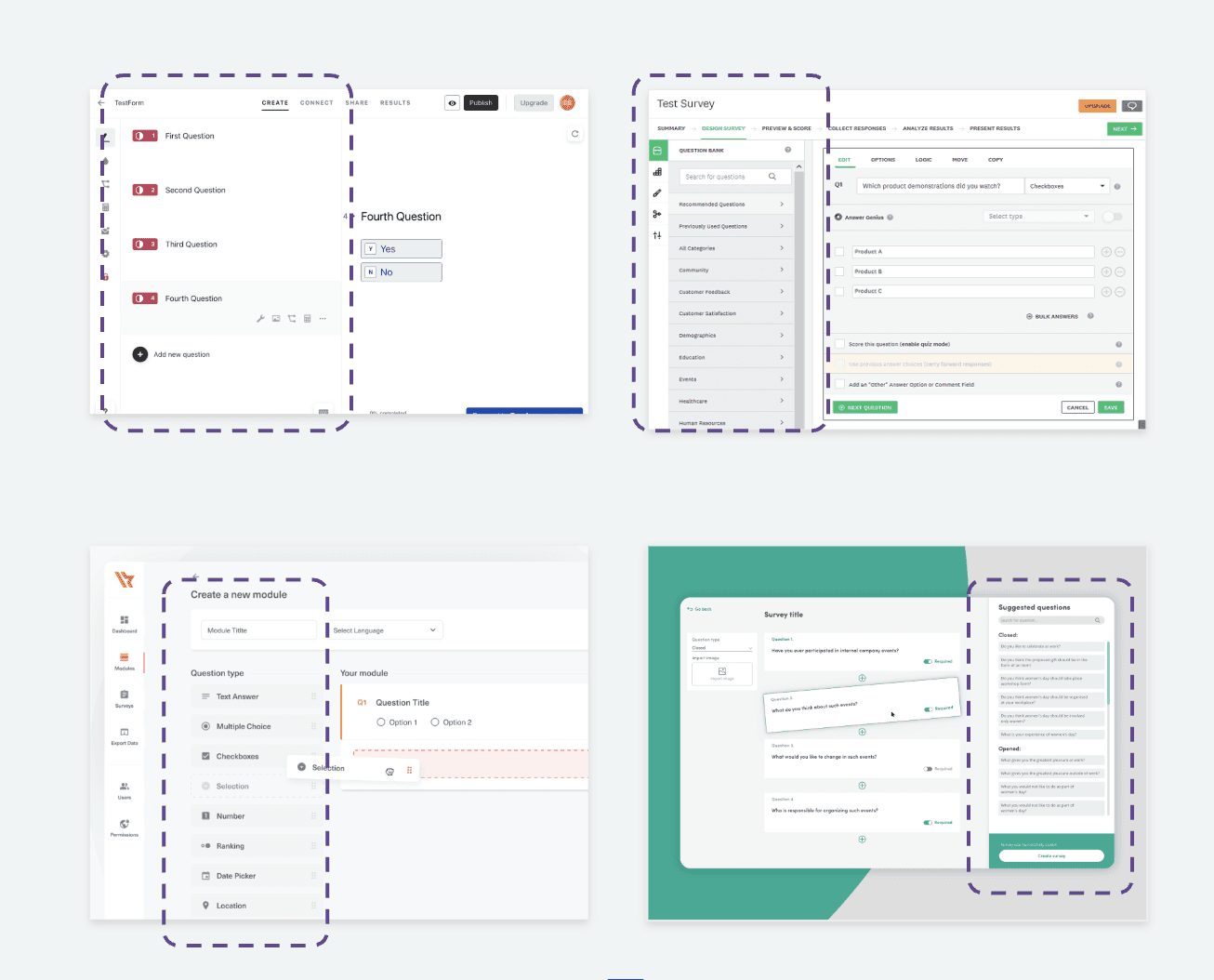
Competitive analysis showed that leading popular questionnaire platforms use a two-panel UI to manage tiered questionnaires, visually separating question hierarchy from question details.
Why it matters
Supporting multiple question levels allows teams to collect the right amount of information based on risk.
Design Solution 🛠️
Evolving the layout to support scale
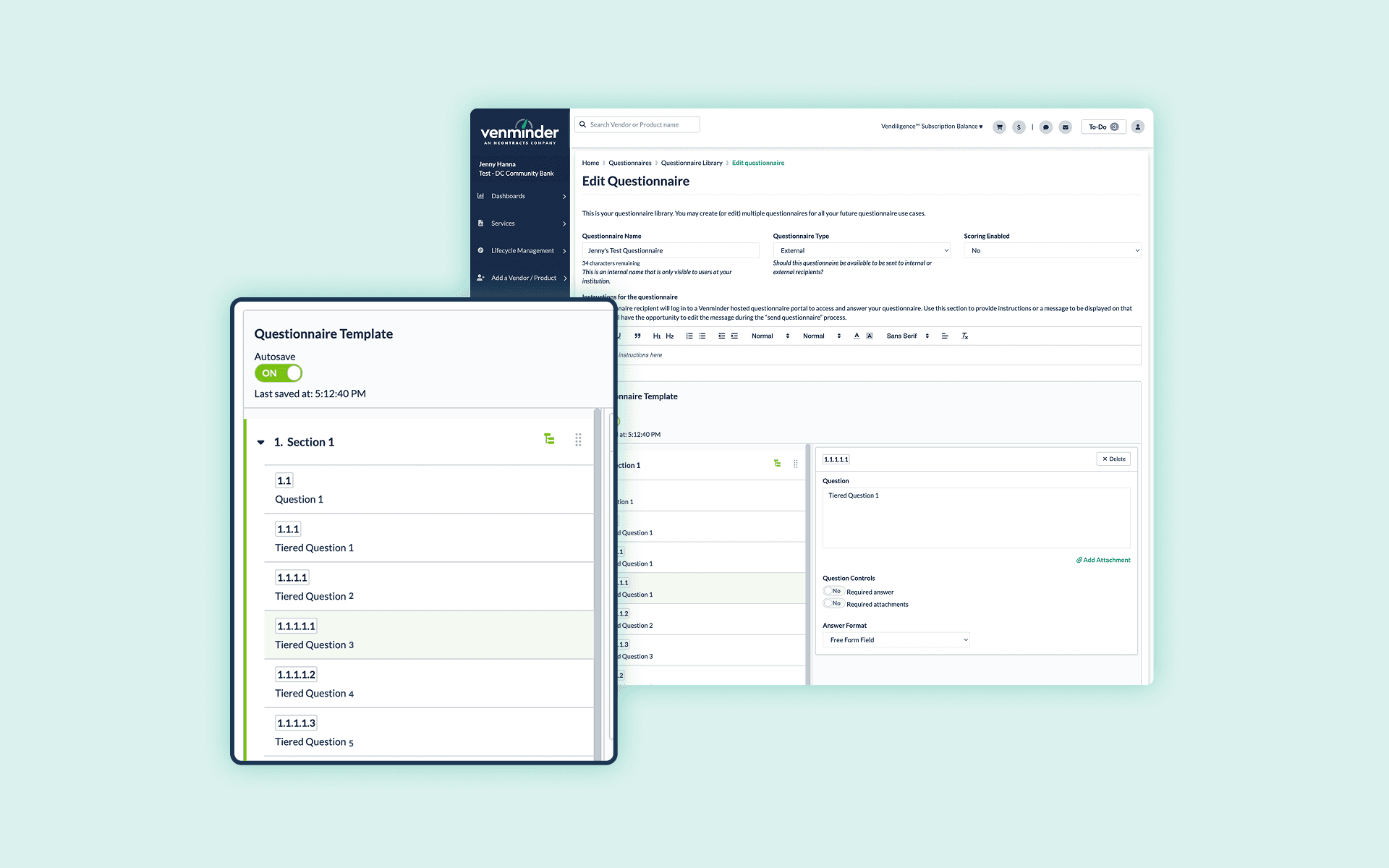
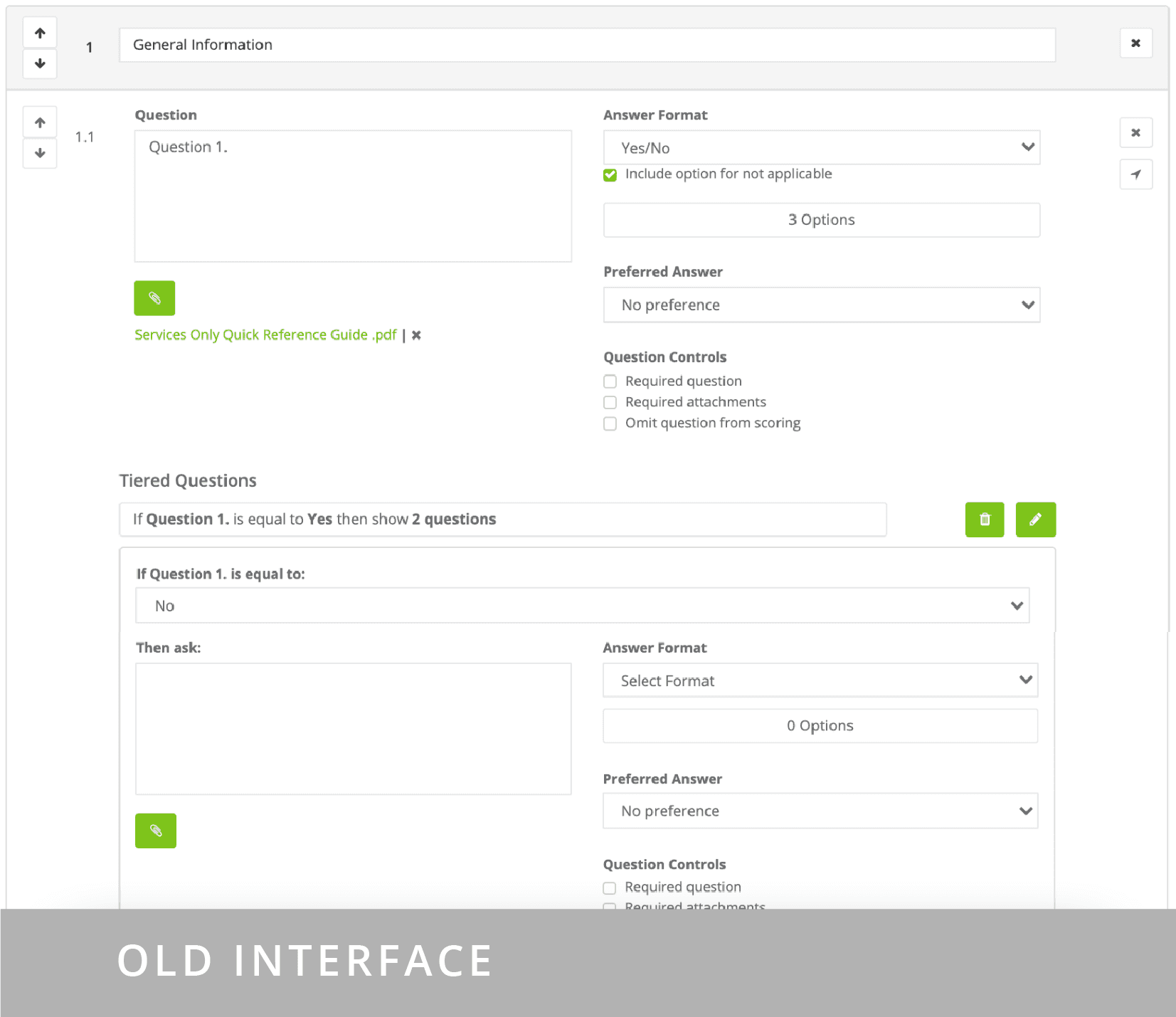
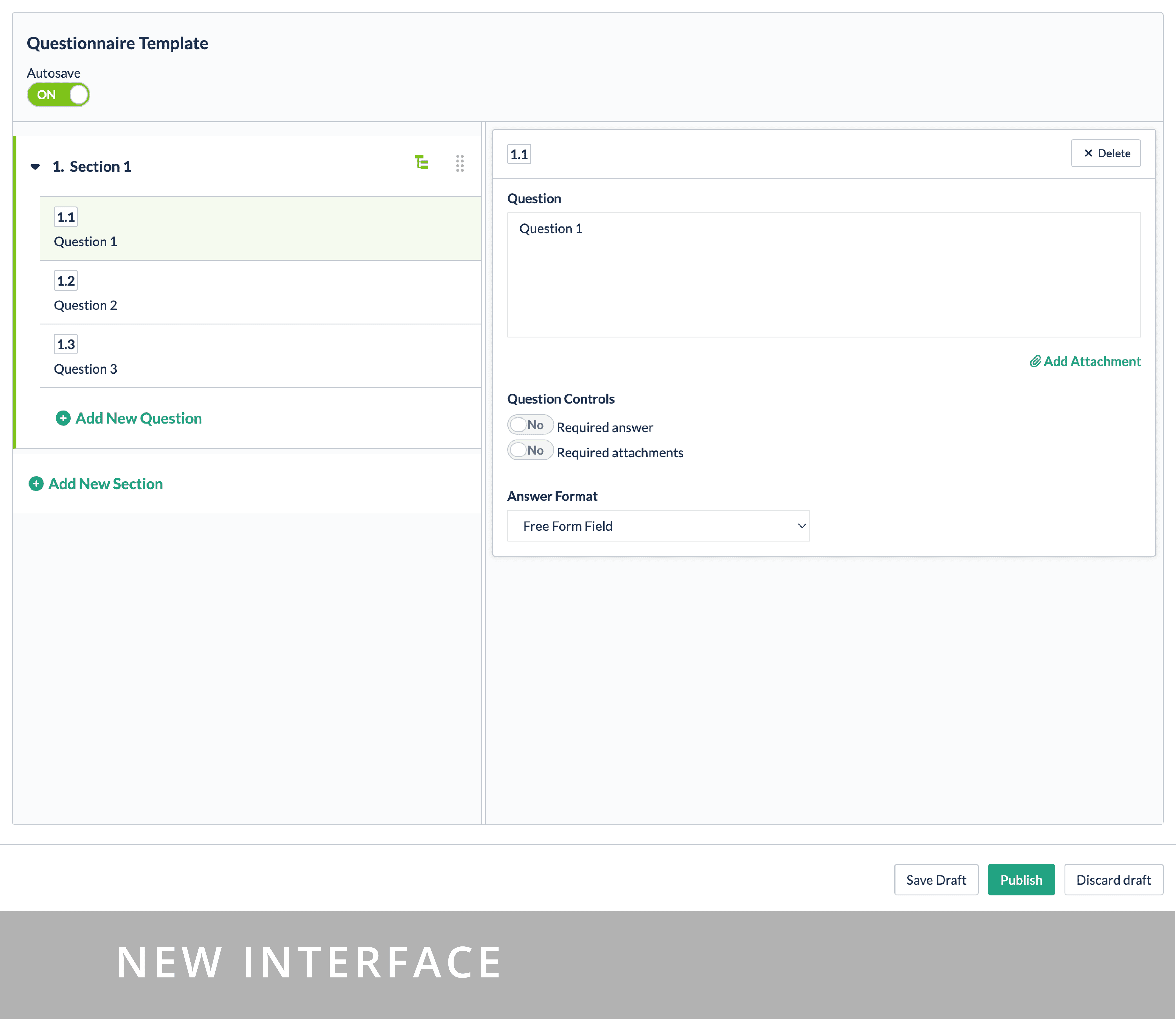
I transitioned the questionnaire builder from a single-panel layout to a two-panel UI, allowing question hierarchy and question details to coexist without competing for space. This created a more scalable foundation for supporting deeper, tiered question structures.
Reducing setup time with preloaded questions
Prompting tiered logic through answer format selection
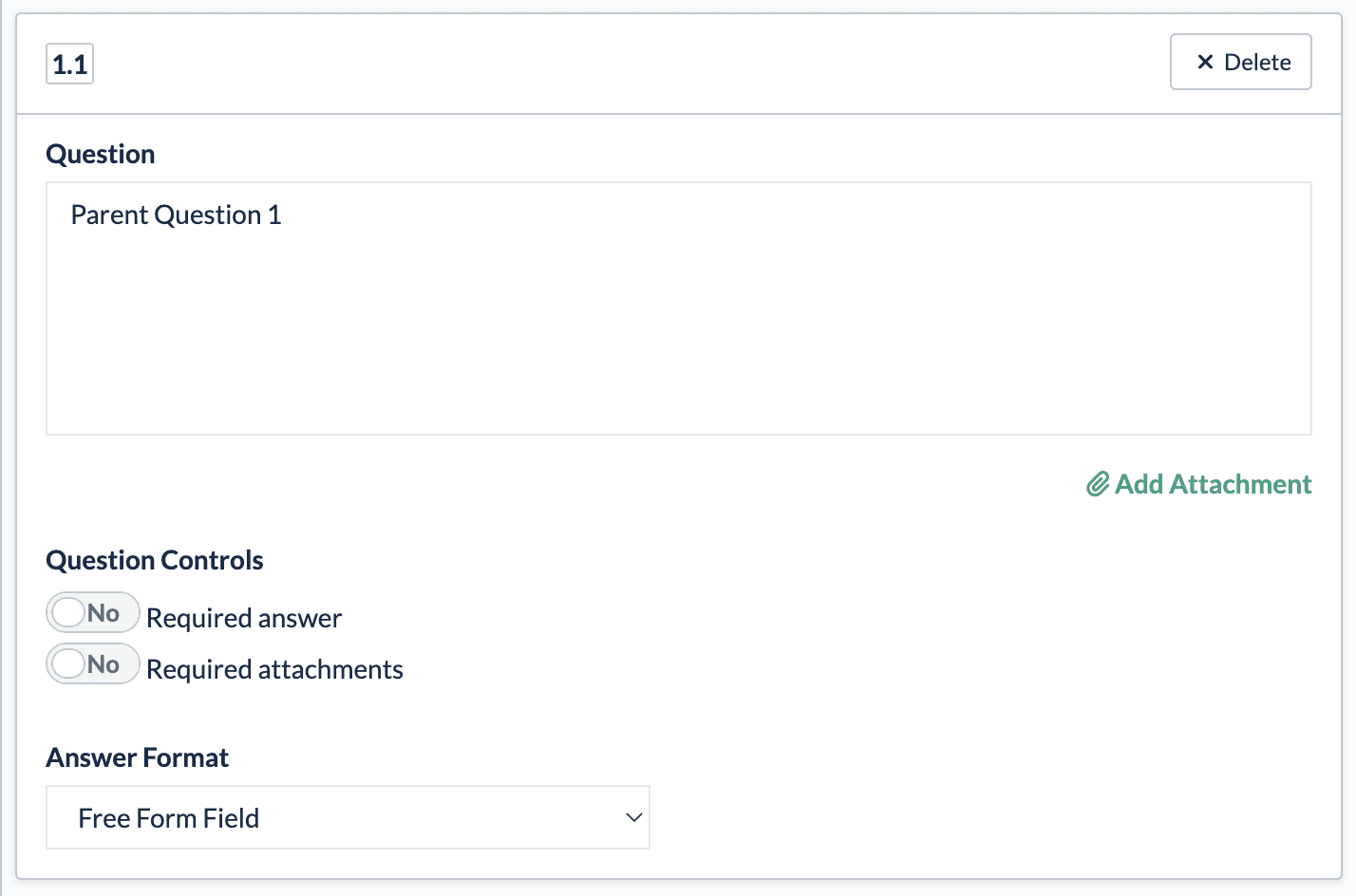
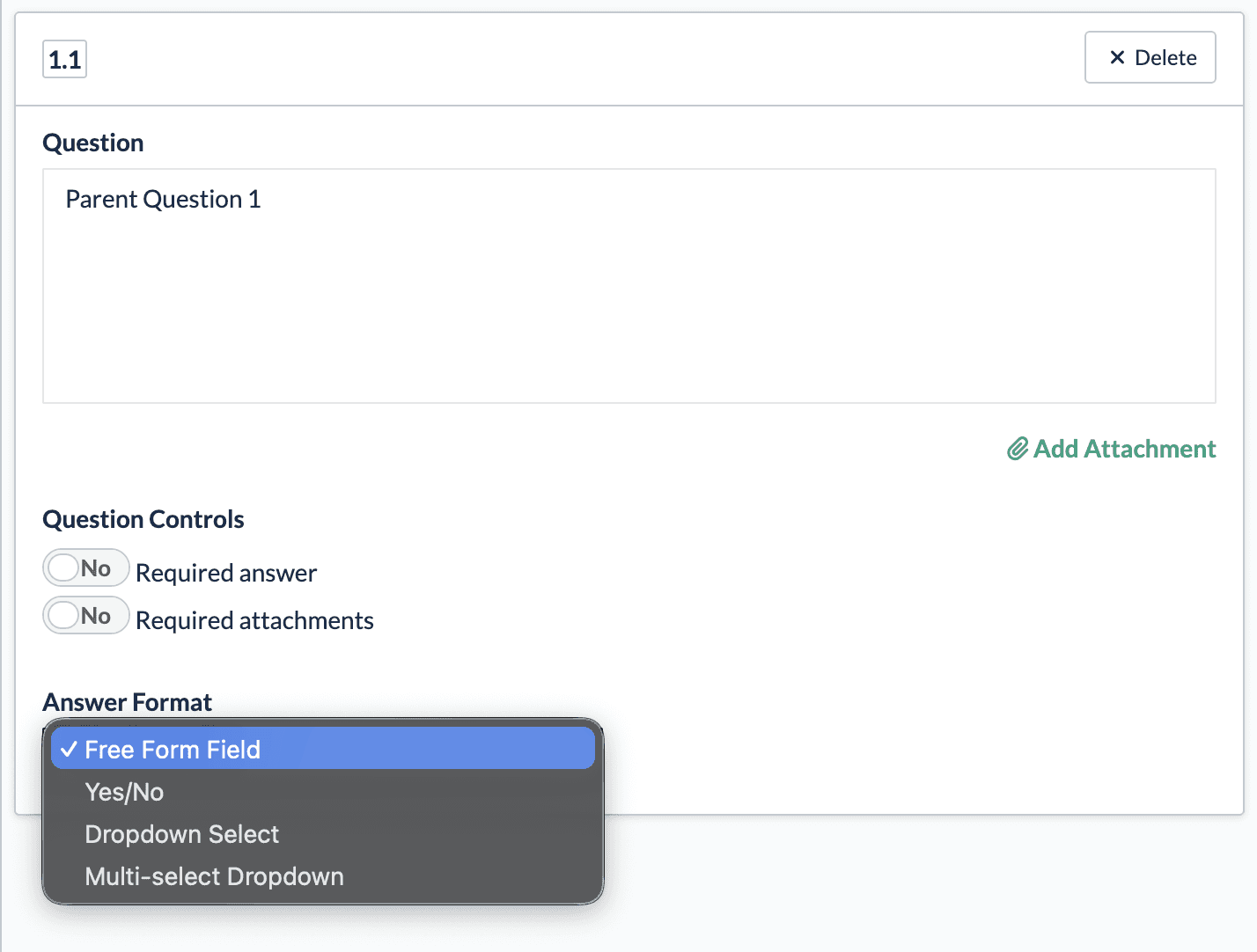
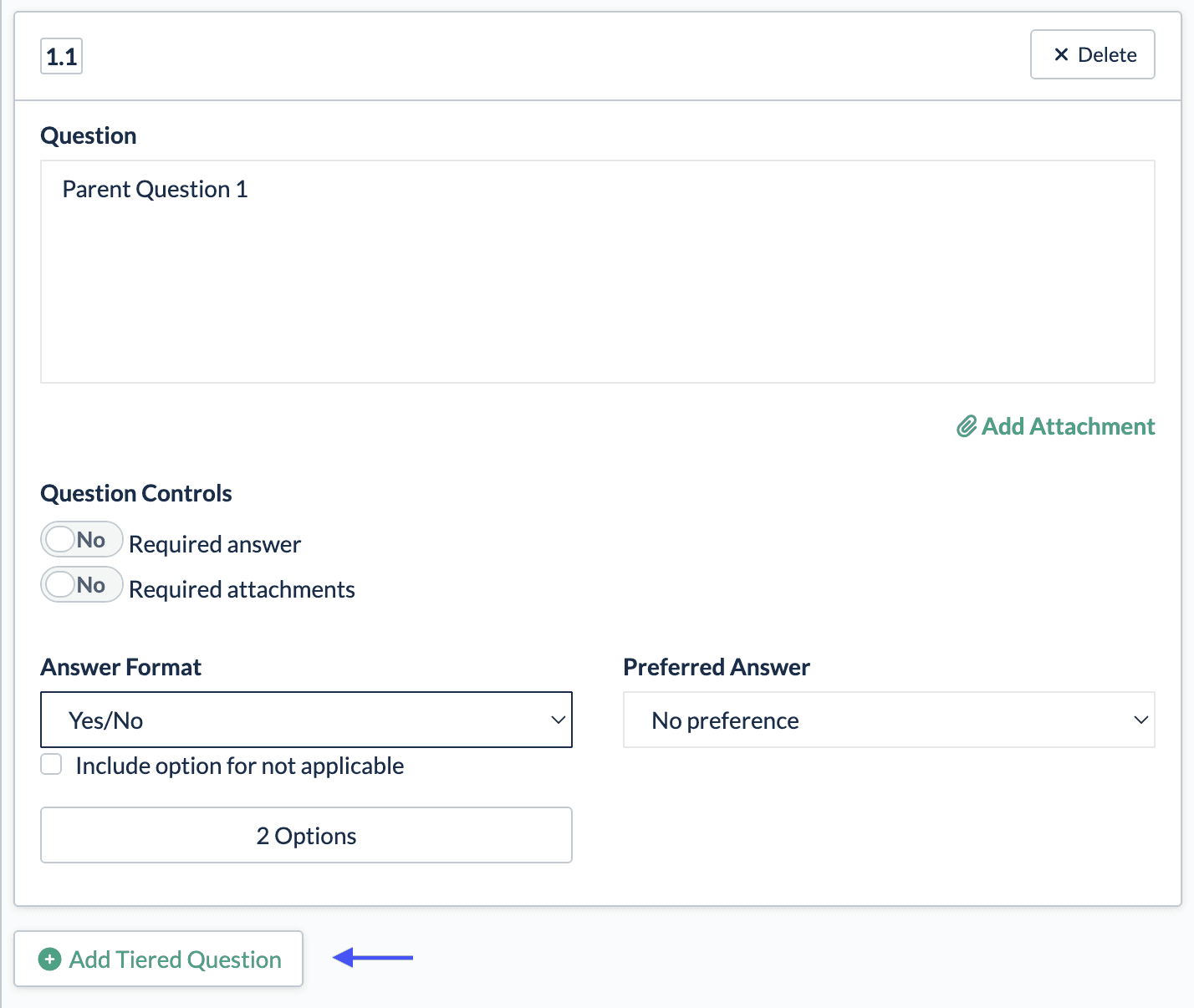
Free-form answers are the default response type when creating a question. When a response is changed to a structured option, the UI prompts users to add tiered follow-up questions. This helps teams introduce depth naturally, only when it becomes relevant.
Default Response Answer Format
By default, the pre-loaded questions are in a free form format.
Selecting a different Answer Format
By default, the pre-loaded questions are in a free form format.
Selecting a different Answer Format
By default, the pre-loaded questions are in a free form format.
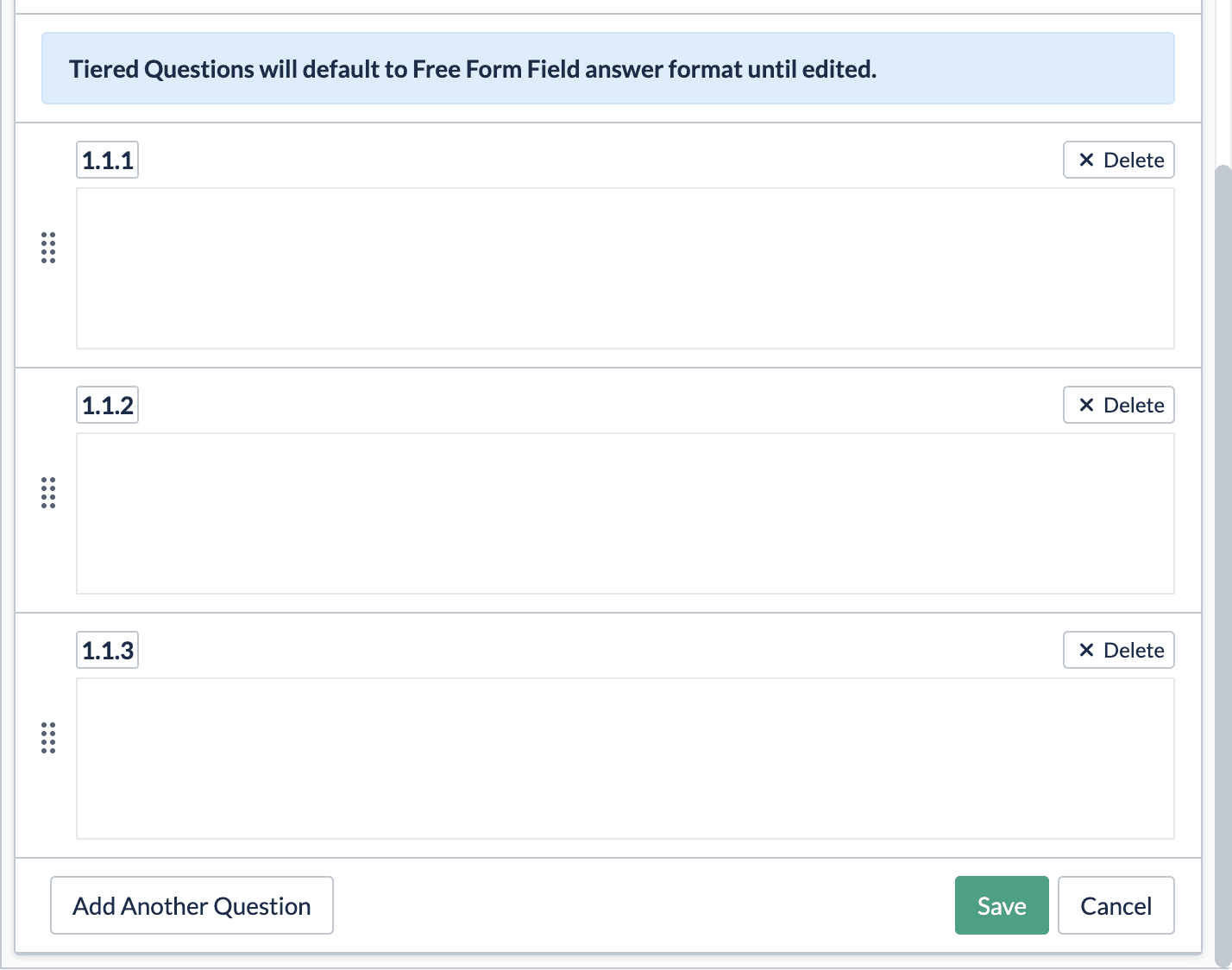
Standardizing tiered question patterns
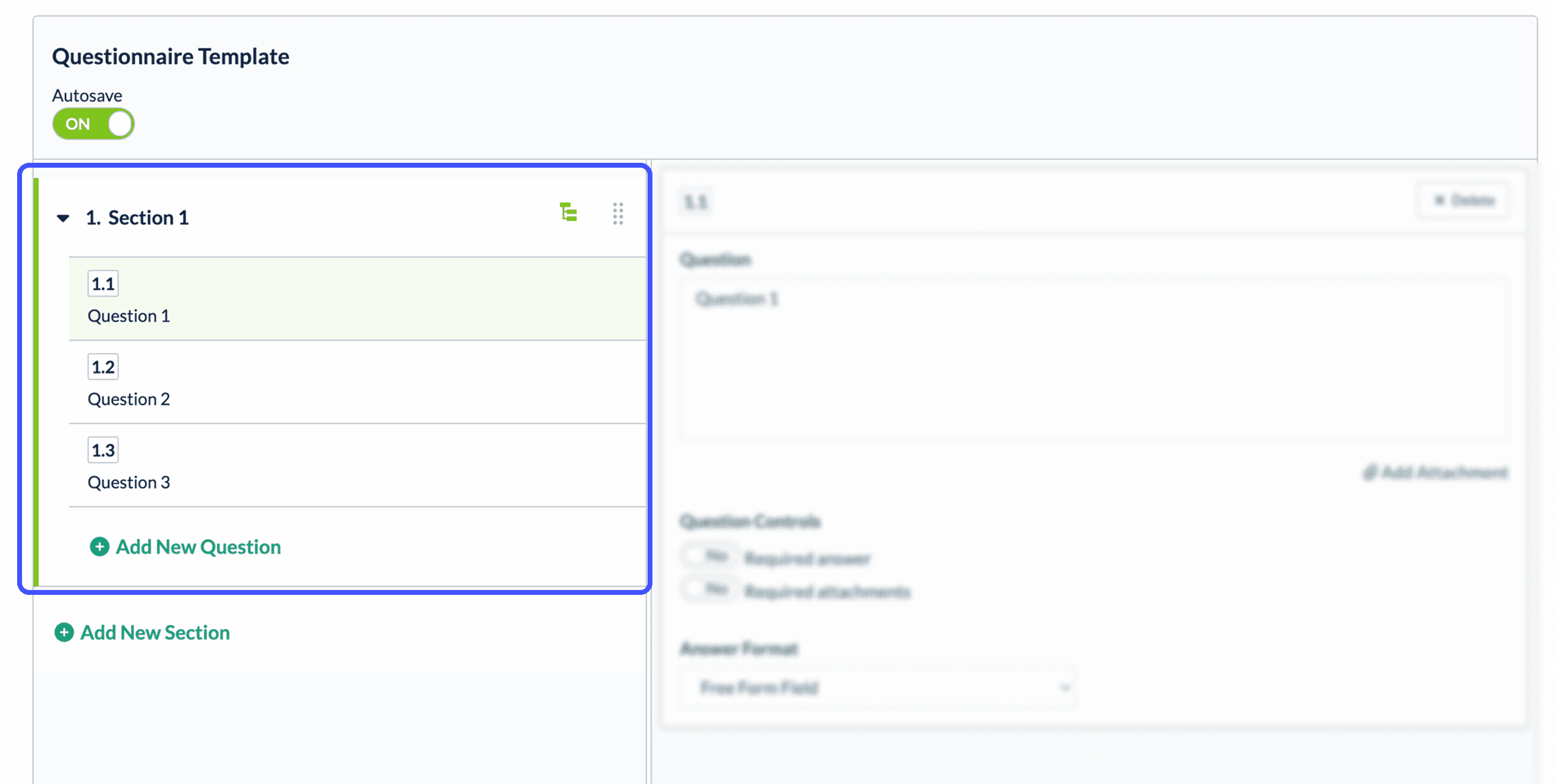
Tiered questions start with three default entries to give teams a quick, consistent starting point. These can be edited or removed at any time, keeping things fast without limiting flexibility.
Final Prototype
Questionnaires > Create New Template
Outcomes & Impact
This work turned a flat, one-size-fits-all questionnaire into a flexible, tiered experience that scales with vendor complexity. Teams can now collect deeper, more meaningful information without adding unnecessary work for themselves or their vendors.
Other Projects